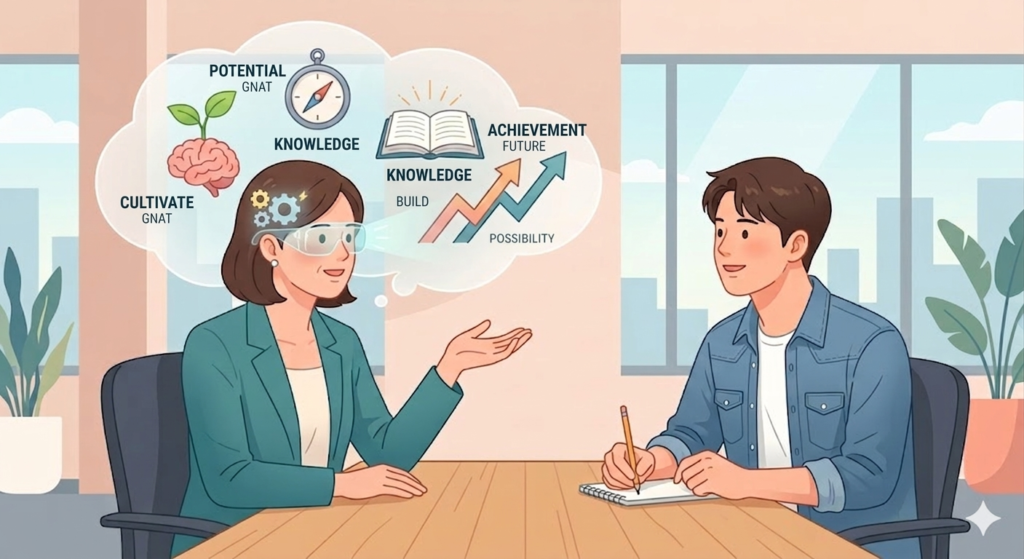

If you are a leader, you have probably thought about this at least once. "They are clearly capable and diligent, but why do they only do what they are told and never suggest ideas or take a step ahead?" You want them to take care of things on their own and become the owner of their work without you having to say anything, but reality always falls a bit short of your expectations.
This is when you need to think about "Motivation Fit." Motivation fit refers to how well the way a person feels motivated matches the work they are currently doing. The more their work connects with their sense of fun, desire for growth, and pursuit of meaning, the more people will move on their own without being told. Today, I would like to talk about what kind of conversations leaders should have to understand their team members' intrinsic motivation and connect it with their work.
When do people actually want to work? Usually, it is when their intrinsic motivation comes alive. Motivation is largely divided into extrinsic and intrinsic motivation. Extrinsic motivation is an external stimulus such as rewards, evaluations, and promotions, while intrinsic motivation is an inner strength that arises from within, such as fun, growth, and meaning. Extrinsic motivation can drive short-term behavior, but it is difficult to sustain for a long time, whereas intrinsic motivation keeps people moving consistently. The leader's role is to help the team member's intrinsic motivation align well with their current work. Therefore, leaders should ask their team members the following four things.
First, ask them when they felt they were having fun and help connect it to their work.
Everyone has a different point where they find joy while working. Some people get deeply immersed when analyzing and solving problems, while others get energy when coordinating and communicating with people. If you assign tasks without knowing this point, the work might get done, but it is hard for initiative to develop.
The moment a leader asks a team member when they had fun, the work stops being just a simple task and begins to connect with personal interest and curiosity. For example, you can ask questions like, "Was there a recent moment at work where you lost track of time?" or "What role were you playing at that time?" Through this conversation, it is important to work together to find ways to bring even a little bit of that fun element into their current tasks.

Second, ask them when they feel they are growing and help connect it to their work.
People put in more energy when they feel they are growing. Some feel a sense of growth when learning a new skill, while others feel they are growing when they have greater responsibility or decision-making authority. Conversely, the moment they feel their growth has stopped, their motivation drops sharply. Leaders need to recognize under what circumstances their team members feel a sense of growth. You can get clues through questions like, "Have you had a recent experience where you felt you grew a bit?" or "What did you learn at that time?" Then, talk together about how their current work can connect with that direction of growth.

Third, ask them what meaning and impact their work has and help connect it to their work.
People become more responsible and engaged when they know how the work they do impacts someone else. It is especially easy to lose meaning in repetitive tasks, and this is where a leader's questions play a major role. Questions like, "What does this work mean to me?", "If this work goes well, who will benefit the most?", and "What kind of change will this result create for the team or customers?" help team members look at their work from a level above. The moment they recognize the meaning of their work, their attitude toward the exact same task often changes.

Fourth, help them connect their current work to their future.
If people feel that what they are doing now has nothing to do with their future, they easily get exhausted. On the flip side, if they feel that their current experience is connected to the direction they want to go, they can endure it even when it is tough. A leader cannot design every single career path, but they can help find the clues for that connection. You can reframe their current work as a practice process for the future by asking questions like, "What kind of role would you like to try in the future?" and "What part of your current work can help you with that goal?"

Motivation fit is not completed in just one conversation. However, if you try sharing even just one of the questions introduced today with a team member, it can be a turning point that changes how they view their work. Choose just one question during this week's 1-on-1 meeting or a short interview, and give it a try.
#LeadershipCommunication #ManagerCommunication #Leadership #Communication #Coaching #Facilitation #Conversation #1on1 #CorporateTraining #CoachAnna
Leader's one-on-one book
https://www.yes24.com/product/goods/177186829
Youtube in Korean
[on Amazon] Situational One-on-Ones book link
Youtube in English